

“Indirect Tax I Indirect Tax Litigation I Customs & FTP I Central Licensing I Arbitration I Advisory”
Dated: 30.05.2026
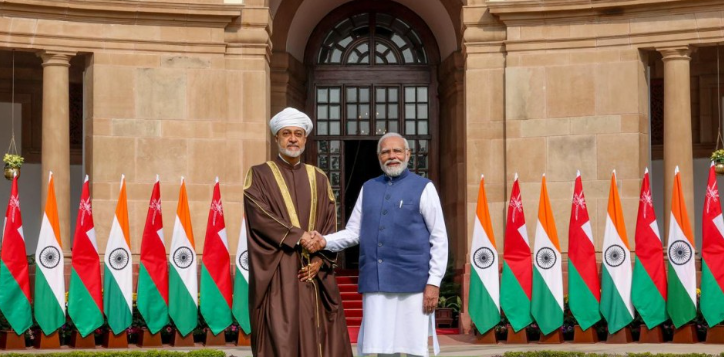
Understanding the Rules of Origin under the India-Oman Comprehensive Economic Partnership Agreement (CEPA) 2026
The India-Oman Comprehensive Economic Partnership Agreement (CEPA) 2026 introduces a robust framework for determining the origin of goods, which is crucial for businesses seeking preferential tariff treatment under this bilateral trade agreement. This article provides a detailed overview of the rules, criteria, and procedures that govern the determination of origin for goods traded between India and Oman.
What Are Rules of Origin?
Rules of origin are the criteria used to define where a product was made and are essential for implementing trade agreements. Under the India-Oman CEPA, these rules ensure that only goods genuinely originating from either India or Oman benefit from reduced tariffs and other trade advantages.
Key Definitions
- Originating Product: A product that qualifies as originating in India or Oman according to the agreement’s rules.
- Wholly Obtained: Products entirely produced or obtained in one country, such as minerals, agricultural products, or live animals born and raised there.
- Product Specific Rules (PSR): Additional requirements for certain products, often involving value addition or a change in tariff classification.
- Value Addition (VA): The increase in value resulting from production or processing in the exporting country, calculated using either the build-up or build-down method.
Origin Criteria
A product is considered originating and eligible for preferential treatment if it meets one of the following:
- Wholly Obtained or Produced: The product is entirely sourced or produced in India or Oman (e.g., crops grown, minerals extracted, or animals born and raised).
- Sufficient Working or Processing: The product undergoes substantial transformation as defined by the Product Specific Rules (PSR) in Annexure-B. This may involve:
- A required percentage of value addition (e.g., VA 40%)
- A change in tariff classification at the chapter, heading, or subheading level (e.g., CTH, CTSH)
Value Addition Methods
- Build-down Method: (FOB value or Ex Works price – Value of Non-Originating Materials) / FOB value or Ex Works price × 100
- Build-up Method: (Value of Originating Material + Direct Labour Cost + Direct Overhead Cost) / FOB value or Ex Works price × 100
Minimal Operations
Certain processes are considered insufficient to confer origin, such as simple packaging, labelling, or assembly. The final substantial transformation must occur in the exporting country.
De Minimis Rule
Non-originating materials that do not meet the required change in tariff classification may still be considered originating if their value does not exceed 10% of the FOB value (or weight, for textiles) of the exported product.
Bilateral Cumulation
Materials originating in one Party (India or Oman) used in the production of a product in the other Party are considered as originating, provided the last substantial transformation occurs in the exporting Party.
Packaging, Accessories, and Indirect Materials
- Retail packaging is considered in value addition calculations.
- Accessories and spare parts delivered with the product are included if not invoiced separately.
- Indirect materials (e.g., lubricants, tools) are always considered originating, regardless of their source.
Proof of Origin and Certification
To claim preferential tariff treatment, exporters must provide:
- A Certificate of Origin (COO) in the prescribed format (Annexure-C), issued by the designated authority.
- The COO must be in English, bear a unique serial number, and be valid for twelve months from the date of issue.
- In case of third-party invoicing, relevant details must be included in the COO.
Verification and Compliance
- Importing authorities may verify the authenticity of the COO and the origin of goods through documentation, questionnaires, or even factory visits.
- Exporters and producers must maintain records and supporting documents for at least five years.
- False declarations or non-compliance can result in denial of preferential treatment and penalties.
Product Specific Rules (PSR) Examples
- Live Animals (Chapter 1): Must be wholly obtained.
- Crustaceans, Molluscs (0306-0308): Require at least 35% value addition.
- Textiles (Chapters 50-63): Generally require a change in tariff heading and 40% value addition.
- Metals and Machinery (Chapters 72-85): Require change in tariff subheading and 40% value addition.
Application Process
- Exporter/Producer submits an application with supporting documents to the issuing authority.
- Certificate of Origin is issued after verification.
- Importer presents the COO to customs for preferential tariff treatment.
Conclusion
The India-Oman CEPA 2026 rules of origin are designed to facilitate genuine trade, prevent circumvention, and ensure that only eligible goods benefit from the agreement. Businesses engaged in bilateral trade should familiarize themselves with these rules to maximize benefits and ensure compliance.
Listen to this on our #YouTube Channel
In case you face any issues related to Indirect Tax-Customs, GST, Foreign Trade Policy (FTP), Arbitration matters and Central Licensing and related advisory matters in India then please feel free to get in touch with SJ EXIM Services.
We offer Legal advice and litigation support in matters related to Indirect Tax-Customs, FTP, other Indirect Tax matters & Arbitration law, all sorts of Central licensing and related matters. Come and explore the new way of doing business with us!
Source: CBIC, Ministry of Finance, Govt. of India
Handy Download:
Connect with us for more-
@ Team S J EXIM SERVICES, New Delhi, IN
CP: Ms. Shubhra Jha, Founder
Tel: +91-11-4999 2707 I +91-9999005693
Web: www.sjexim.services
EMAIL: operations@sjexim.services I shubhra@sjexim.services
Facebook: www.facebook.com/sjeximservices
LinkedIn: https://www.linkedin.com/company/90794255/admin/feed/posts/
YouTube: https://www.youtube.com/@sjeximIndia
Subscribe our WhatsApp Channel: https://whatsapp.com/channel/0029VaTxDT8JZg4CHEOSoK47
Subscribe our Telegram Channel: https://t.me/sjeximindia



Leave a Reply