

“Indirect Tax I Indirect Tax Litigation I Customs & FTP I Central Licensing I Arbitration I Advisory”
Dated: 02.04.2026
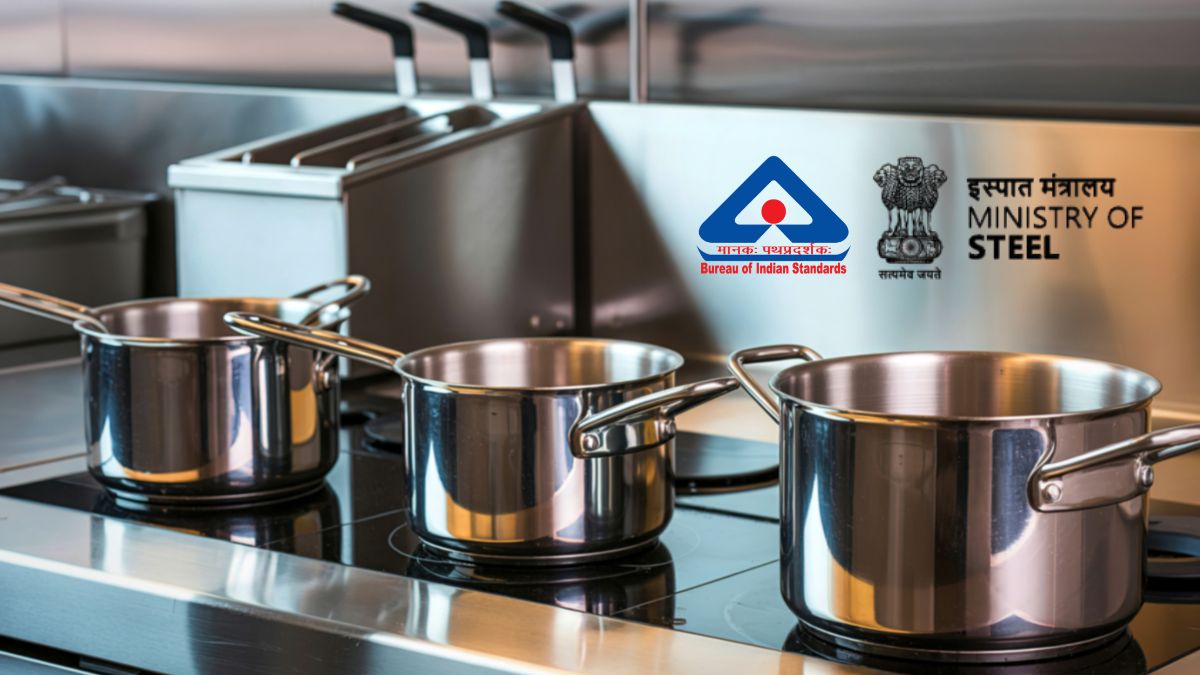
Mandatory Quality Standards for Cookware, Utensils, and Cans for Foods and Beverages
The Government of India has introduced a new regulation titled “Cookware, Utensils and Cans for Foods and Beverages (Quality Control) Order, 2026” to ensure the quality and safety of cookware, utensils, and cans used for food and beverages. This order, published in the official Gazette, mandates compliance with specific Indian Standards and the use of the Standard Mark issued by the Bureau of Indian Standards (BIS). Below is a detailed overview of the order, its provisions, and its implications.
Key Highlights of the Order
1. Title and Commencement
The regulation is officially named the Cookware, Utensils and Cans for Foods and Beverages (Quality Control) Order, 2026. It will come into effect on the date of its publication in the official Gazette.
2. Compulsory Use of Standard Mark
The order mandates that all goods and articles listed in the Table must conform to the corresponding Indian Standards and bear the Standard Mark issued by the Bureau of Indian Standards (BIS). This ensures that the products meet the prescribed quality and safety standards.
The order provides specific exemptions under the following conditions:
- Exported Goods: Goods manufactured domestically for export are exempt from this order.
- Pre-implementation Stock: Goods manufactured or imported before the implementation date specified in the Table are exempt, provided the manufacturer or importer has applied for certification or is certified by the BIS. Such goods can be sold or displayed for up to six months from the implementation date, subject to a declaration certified by a Chartered Accountant.
- Imported Goods Containing Material: Goods filled with solid, liquid, or gas material when imported into India are exempt.
- Research and Development: Up to 200 goods or articles imported annually for research and development purposes by manufacturers of cookware, utensils, and cans for food and beverages are exempt. However, these goods cannot be sold commercially and must be disposed of as scrap. Manufacturers are required to maintain year-wise records and furnish them to the Central Government.
3. Implementation Timeline
The order specifies different implementation dates for general enterprises, small enterprises, and micro-enterprises. The timeline is as follows:
| Goods or Articles | Indian Standard | Title of Indian Standard | General Enterprises | Small Enterprises | Micro Enterprises |
| Cookware, Utensils, and Cans for Foods and Beverages | 14756:2024 | Stainless Steel Utensils | 1st October, 2025 | 1st January, 2026 | 1st April, 2026 |
| 13983:1994 | Stainless Steel Sinks for Domestic Purposes | 1st October, 2025 | 1st January, 2026 | 1st April, 2026 | |
| 18427:2024 | Three-piece round open-top metal cans for foods and beverages | 1st October, 2025 | 1st January, 2026 | 1st April, 2026 |
Note: The latest version of the Indian Standards, including amendments notified by the BIS, will apply.
4. Certification and Enforcement Authority
The Bureau of Indian Standards (BIS) is designated as the certifying and enforcing authority for the goods and articles specified in the Table. Manufacturers and importers must obtain a license from the BIS under Scheme-1 of Schedule-II of the Bureau of Indian Standards (Conformity Assessment) Regulations, 2018 to use the Standard Mark.
Implications of the Order
- Enhanced Product Quality: The mandatory compliance with Indian Standards ensures that cookware, utensils, and cans for food and beverages meet high-quality benchmarks, safeguarding consumer health and safety.
- Boost to Exports: By exempting goods manufactured for export, the order supports Indian manufacturers in competing globally without additional regulatory burdens.
- Support for Research and Development: The exemption for imported goods used in R&D encourages innovation in the cookware and food packaging industry.
- Gradual Implementation: The staggered implementation dates for general, small, and micro-enterprises provide flexibility to businesses, allowing them to adapt to the new regulations without undue pressure.
- Accountability: The requirement for manufacturers and importers to declare pre-implementation stock certified by a Chartered Accountant ensures transparency and accountability.
Conclusion
The Cookware, Utensils and Cans for Foods and Beverages (Quality Control) Order, 2026 is a significant step toward ensuring the quality and safety of products used in food and beverage preparation and storage. By mandating compliance with Indian Standards and introducing exemptions for specific cases, the order strikes a balance between quality assurance and business flexibility. Manufacturers, importers, and stakeholders in the cookware and food packaging industry must familiarize themselves with the provisions of this order and take necessary steps to ensure compliance within the stipulated timelines.
Listen to this on our #YouTube Channel
In case you face any issues related to Indirect Tax-Customs, GST, Foreign Trade Policy (FTP), Arbitration matters and Central Licensing and related advisory matters in India then please feel free to get in touch with SJ EXIM Services.
We offer Legal advice and litigation support in matters related to Indirect Tax-Customs, FTP, other Indirect Tax matters & Arbitration law, all sorts of Central licensing and related matters. Come and explore the new way of doing business with us!
Source: Ministry of Steel
Handy Download:
Connect with us for more-
@ Team S J EXIM SERVICES, New Delhi, IN
CP: Ms. Shubhra Jha, Founder
Tel: +91-11-4999 2707 I +91-9999005693
Web: www.sjexim.services
EMAIL: operations@sjexim.services I shubhra@sjexim.services
Facebook: www.facebook.com/sjeximservices
LinkedIn: https://www.linkedin.com/company/90794255/admin/feed/posts/
YouTube: https://www.youtube.com/@sjeximIndia
Subscribe our WhatsApp Channel: https://whatsapp.com/channel/0029VaTxDT8JZg4CHEOSoK47
Subscribe our Telegram Channel: https://t.me/sjeximindia





Leave a Reply