

“Indirect Tax I Indirect Tax Litigation I Customs & FTP I Central Licensing I Arbitration I Advisory”
Dated: 02.09.2026
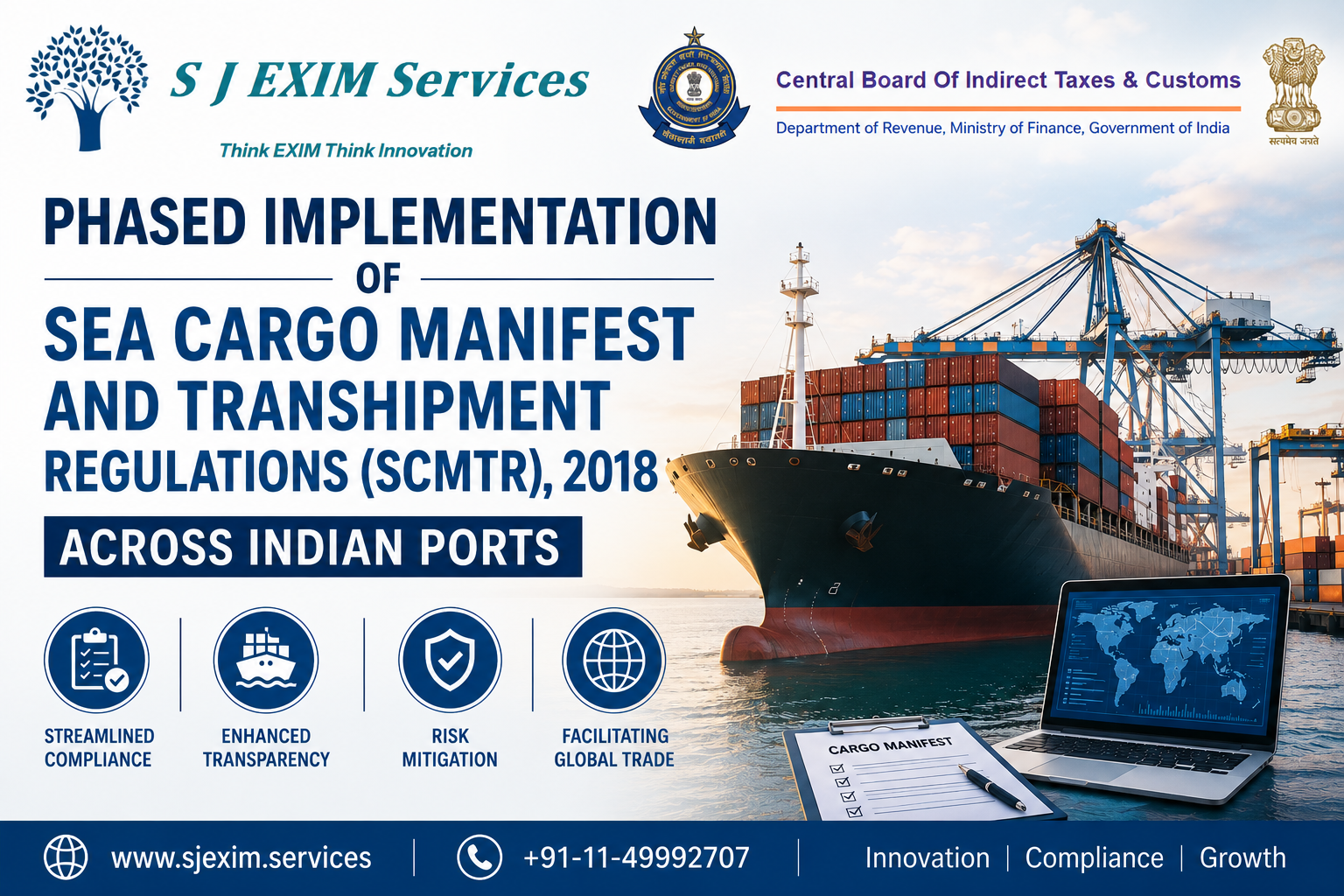
Phased Implementation of Sea Cargo Manifest and Transhipment Regulations (SCMTR), 2018 Across Indian Ports
The Indian Ministry of Finance has announced the phased implementation of the Sea Cargo Manifest and Transhipment Regulations (SCMTR), 2018, marking a significant step towards digitizing and streamlining sea cargo operations at Indian ports. This article provides a comprehensive overview of the SCMTR rollout, its objectives, the implementation schedule, and what stakeholders need to know.
What is SCMTR, 2018?
The Sea Cargo Manifest and Transhipment Regulations (SCMTR), 2018, were introduced to modernize and standardize the processes related to the manifesting and transhipment of sea cargo in India. The regulations mandate the electronic filing of cargo manifests and related messages, aiming to enhance transparency, efficiency, and compliance in maritime logistics.
Key Objectives of SCMTR
- Digitization of Cargo Processes: Transition from paper-based to electronic filing of manifests and transhipment messages.
- Improved Transparency: Real-time data sharing among stakeholders, including customs, port authorities, and logistics providers.
- Faster Cargo Clearance: Streamlined processes reduce delays and improve turnaround times at ports.
- Regulatory Compliance: Ensures all stakeholders adhere to uniform standards and timelines for cargo documentation.
Implementation Timeline and Phased Rollout
The SCMTR framework, after successful development and testing of electronic messaging, is being implemented in phases across Indian ports starting from September 2026. The schedule is designed to allow stakeholders adequate time to adapt and onboard the new system.
Key Dates and Ports
- 1st September 2026: Goa (INMRM1), Bombay (INBOM1)
- 7th September 2026: Mangalore (INNML1), Vizag (INVTZ1), Kakinada (INCOK1)
- 11th September 2026: Tuticorin (INTUT1), Gangavaram (INGGV1), Cuddalore (INCDL1)
- 21st September 2026: Cochin (INKAK1), Paradeep (INPRT1), Ennore (INENR1), Kattupalli (INKAT1)
- 28th September 2026: Kandla (INIXY1), Kolkata (INCCU1), Hazira (INHZA1), Dahej (INDAH1), Pipavah (INPAV1), Karanja (INKRN1), Haldia (INHAL1), Sikka (INSIK1), Dhamra (INDMA1), Vadinar (INVAD1), Magdalla (INMDA1), Jaigad (INJGD1)
- 5th October 2026: Bhavnagar (INBHU1), Okha (INOKH1), Karwar (INKRW1), Dabhol (INDHP1), Redi (INRED1), Mundra (INMUN1)
- Subsequent Dates: Chennai (INMAA1), Nhava Sheva (JNCII), and remaining ports
Stakeholder Guidance and Transition Measures
- Electronic Filing: All stakeholders, including shipping lines, agents, and SEZ units, are expected to file electronic messages in the Customs Automated System for smooth cargo clearance.
- Transition Period: SEZ units and other stakeholders should use this period to onboard and familiarize themselves with the SCMTR framework.
- Outreach and Support: Customs field formations will issue public notices and conduct outreach programs to educate and assist stakeholders.
- Issue Resolution: System-related issues will be coordinated with the Directorate General of Systems, while policy matters will be escalated to the Board.
- No Penal Action: During the initial implementation phase, no penalties will be imposed for non-compliance as stakeholders adapt to the new system.
Benefits of SCMTR Implementation
- Enhanced Efficiency: Automated processes reduce manual intervention and errors.
- Faster Turnaround: Quicker cargo clearance benefits importers, exporters, and logistics providers.
- Regulatory Alignment: Brings Indian ports in line with global best practices for maritime logistics.
- Stakeholder Collaboration: Encourages better coordination among customs, port authorities, and the trade community.
Conclusion
The phased implementation of SCMTR, 2018, is a transformative move for Indian maritime trade. Stakeholders are encouraged to actively participate in the transition, leverage support measures, and ensure timely compliance for a seamless cargo movement experience.
In case you face any issues related to Indirect Tax-Customs, GST, Foreign Trade Policy (FTP), Arbitration matters and Central Licensing and related advisory matters in India then please feel free to get in touch with SJ EXIM Services.
We offer Legal advice and litigation support in matters related to Indirect Tax-Customs, FTP, other Indirect Tax matters & Arbitration law, all sorts of Central licensing and related matters. Come and explore the new way of doing business with us!
We specialize in paralegal services, litigation support, tax and regulatory matters, delivering reliable, efficient, and result-oriented legal assistance.
Source: CBIC, Ministry of Finance, Govt. of India
Handy Download:
Connect with us for more-
@ Team S J EXIM SERVICES, New Delhi, IN
CP: Ms. Shubhra Jha, Founder
Tel: +91-11-4999 2707 I +91-9999005693
Web: www.sjexim.services
EMAIL: operations@sjexim.services I shubhra@sjexim.services
Facebook: www.facebook.com/sjeximservices
LinkedIn: https://www.linkedin.com/company/90794255/admin/feed/posts/
YouTube: https://www.youtube.com/@aadrikaalawindia
Subscribe our WhatsApp Channel: https://whatsapp.com/channel/0029VaTxDT8JZg4CHEOSoK47
Subscribe our Telegram Channel: https://t.me/sjeximindia





Leave a Reply